Tuesday, January 12, 2016

Stocking Up on Seeds Time

                                                     My Research Coffee Table


Christmas brought some fabulous gardening gifts. My friend Karen found out somehow that I was gluing my old Annuals book. She surprised me by replacing both it and the Perennials one. Learning from some source that I have trouble keeping track of the days, she also got me this cute cat calendar. From my granddaughter Carolyn, home for Christmas from college in faraway Georgia, I received this Old Farmer's Almanac, without which I cannot live. Notice inside the front cover is a deal from Parks Seeds! Nothing gets done without coffee and fresh half  and half, plus Isabelle's homemade biscotti, to die for. I'm spending my Christmas cash from my son Chris on more daylilies.

Now, down to business. It would seem that after all these years of making garden plans, I'd have an easier time of it. Not true.

              The Frost Date

For starters, there is the frost date. That has to be known in order to plan when to start the indoor seeds, which are all figured  weeks from last frost as the rule. Of course anyone would know when the last frost happens. In Missouri, though, the last frost can be four weeks after the "usual" date.

To make it more challenging, we frequently have temps in the eighties in March. Then it can snow on the daffodils in April. In fact, it almost always does. They don't seem to mind a lot.

My records at this location, where I've lived the last eight years, show frosts usually in April but slightly more in  May, so I have to toss out the generally accepted April date, and wait. The odd thing is that the last frost is only known in  mid-May when it becomes apparent that I could have planted my seedlings four weeks earlier. That's all very well, better late than too early, but what about the broccoli and cabbage, that like cool weather? They have to have enough leaves that frost doesn't bother them unduly, so I am starting them under lights in February.

                                                      What the Seed Catalogs Don't Tell You

The next problem is reticence on the part of the seed companies. Yesterday, I considered ordering some carnation seeds. I checked several reference books about them, finally getting the truth in an old volume. It revealed  that carnations prefer cool damp summers. Why not be up front and mention that at once? I see where the seed companies are motivated by sales, but why should the other references withhold this valuable information?

My problem here in the Midwest is wildly fluctuating temperatures and moisture.  This year,  I think I'll just ignore all plant lifestyle preferences, start all sorts of flowers and see what survives.

                                                       The Co$t
Those of us who do not  have unlimited seed budgets have to shop around for the most seeds per packet and lowest price. Once again, my biggest order went to Pinetree Garden Seeds (superseeds.com).  Then there are the must-have varieties only offered by one company, such as Little Sweetie Peas from Stokes and Long Season Beets and Bravo Cabbages from Harris. I have to have those.

                                                    Other Considerations
For the vegetable garden, there is the fun of checking last season's planting notes and making appropriate crop rotation plans. It's enough to make my head swim. I also like to plant by the light or dark of the moon, but not when starting seeds under lights. Let's not get carried away. For seeds that I've saved, I check my list of vegetable seed viability.

The midwinter high spot for me is the meeting of the family gardeners at Planters in downtown Kansas City.  There, we will get our bulk seeds, spices, special potting mixes, more plant pots and trays. I can barely wait.


Meanwhile, I'll continue to burn my mind to a crisp placing the seed orders.

Saturday, December 19, 2015

The Most Wonderful Time of the Year

Only a few more days. I can barely wait. My preparations are complete. When I nestle all snug in my flannel snowman sheets at night, I  have visions not of sugar-plums ( whatever they are) but of  broccoli.

One of my calendars says it is the First Day of Winter. That's wrong. It's my favorite time, the Winter Solstice, after which it is perfectly permissible to think about the coming year's garden plans.

I can't help it, I'm a gardener. That's how we are. There is this pull from the earth as the days finally start to get longer.  Soon it will be slowly moving toward life and living!

Yes, I know  "when the days begin to lengthen, the cold begins to strengthen."  Let's not dwell on that. This is the time for big plans, made easier because there is no danger of hard work for months. It's armchair gardening at its finest.

Although I am prohibited by a self-imposed rule to refrain from looking at the new seed and plant catalogs until Christmas afternoon, there's no stopping me from making soil amendments.

Already, I have been sprinkling bits of charcoal from the wood stove on the garden and lily bed.  I've added some chicken manure from the top of the nest box to the compost heap.

The soil is just lying there, cold and wet and forlorn. I was not able to work much organic matter into it last summer, with all that rain. However, there's no sense in dwelling on the failures of gardens past.

Now, it's not possible for me to glance at the front border when bringing in wood, without noticing some spots where new plants could go. Also seen are places where nasty invasive grass has taken hold. I mentally destroy it, using tiny land mines. Kablowie!

I had to glue the binding on one of my favorite garden books, Annuals for Every Purpose. It's a great reference book, but doesn't seem to be holding up under normal use. I was checking why my Gazanias are growing so well now, after many hard freezes, when they are supposed to be frost sensitive and prefer heat and dry conditions. I missed the part about digging them up in the fall for house plants. Now, they are in awfully wet soil and I daren't risk it.

A few days ago, we had so much rain that the river got out of its banks again.The Grand at the flood is a mighty river. Perhaps this season I should concentrate on wetlands plantings. Right now, I could just dig a hole anywhere for an instant lily pond.

While not peeking at the catalogs, I've worked puzzles featuring flowers and seed packets, watched Greenfingers again and fall asleep praying for a better year for cabbages.

Of course I'm ready for Christmas. I've baked three kinds of cookies. There will be a turkey dinner. The lights are up. My presents are wrapped. Plans are made for me to see the grandkids and my grown children. No one can tell that my thoughts are sneakily turning to the upcoming gardening year. That's if they don't know me very well.


Monday, November 9, 2015

Gordion Sweet Potatoes

The sweet potato plants were set in rather heavy clay soil. Taking a cue from earthworms, they produced potatoes that got into a tight knot.

                        This one was especially challenging to untangle.

In ground-breaking surgery lasting seven hours, six gardeners successfully separated these conjoined tubers. Now, all are free to make their way to the dinner table, unencumbered by siblings.

Sunday, October 11, 2015

The Rest of the Honey

The supers that we extracted weeks ago were filled again by the bees. Some partially capped ones went back for the bees to finish up for their winter stores.

Lissa did all the uncapping with just the scratcher comb, finding it works the best for a few supers. She uses it to lift off the tops of the cells. In a big operation, that would be too time-consuming, but we are, mercifully, a very small operation. I once was urged to have more hives and the whole thing became no fun at all. Now, one hive is plenty to manage and provides more honey than we need.

We got another thirty pounds of  wildflower honey, bringing the total for the season to seventy pounds.

My method of raising bees is to disturb them as little as possible and let them get on with their lives. They know what they are about and do not need pharmaceuticals to do what they have been doing for ages.

They run the hive in very dark conditions, so pulling the frames out and checking their progress is the equivalent of shining bright lights on the poor things. They don't have eyelids to squint.

Some beekeepers evacuate the honey supers by using a fume board that drives them from the frames. I feel that's sort of like using tear gas. Perhaps the bees feel abused and look for a nice hollow tree where they will be able to breathe. Call me radical, but using the one-way bee escape seems much kinder.

Leaving a super of honey on the hive for the winter seems sensible. It appears greedy to take too much and leave them just enough to barely survive. This approach is definitely not mentioned in the beekeeping literature.

If I'm wrong about how to treat the bees, I will try another track, but this seems to work for now. I have plenty, they have plenty. What they do is miraculous, so who am I to try and manage that?


Saturday, October 3, 2015

A Trained Chicken

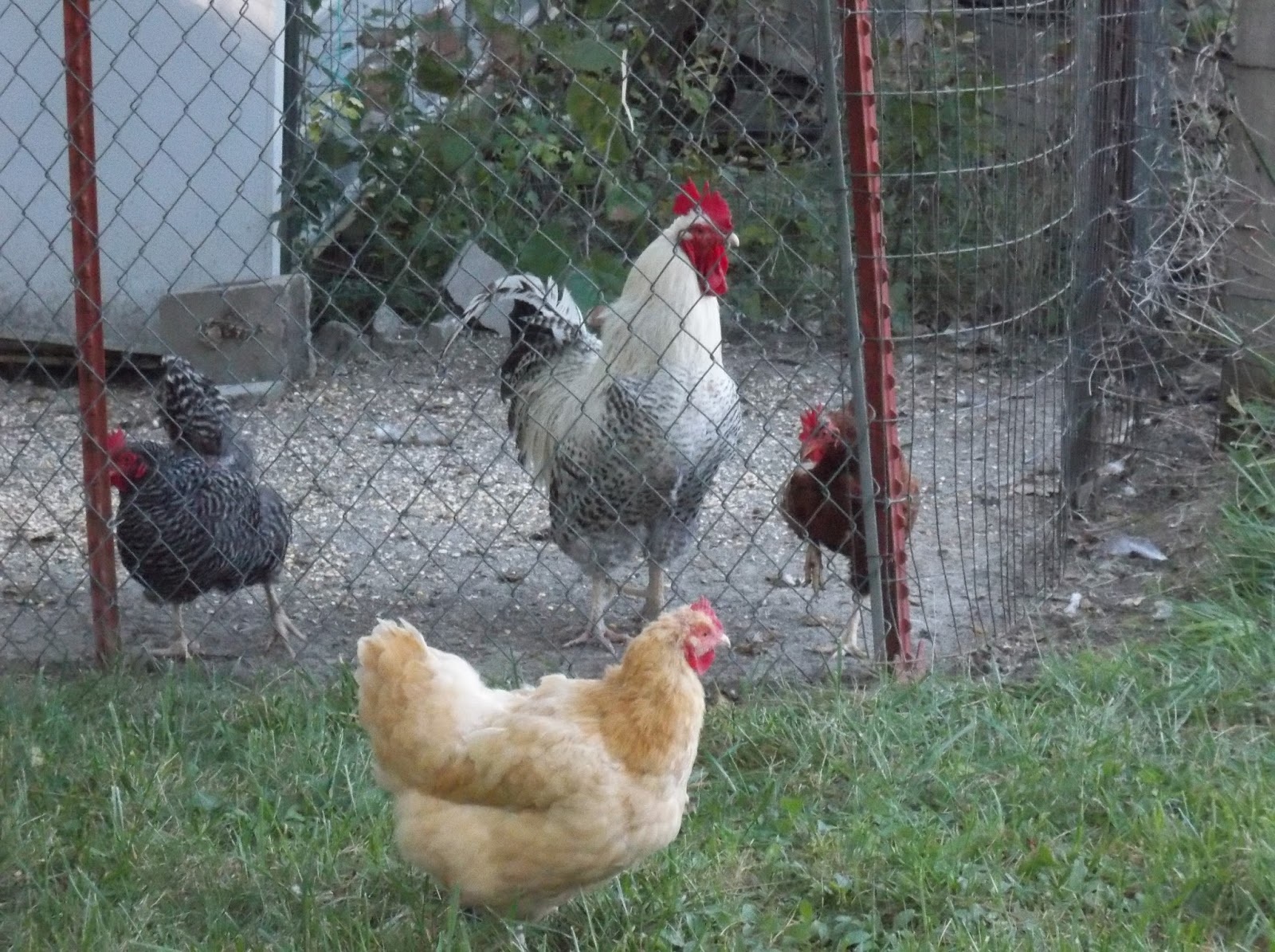
We left off in our tale of two chickens (April) with Buffy the Buff Orpington spending her days on top of the nest box, to avoid the randy rooster. She would only come down for food and water when I was standing guard. Rupert the Rooster was obsessed with her blondness. The other two hens, out of their tiny minds with jealousy, were not kind to her.

The neighbor dog, Sandy, had snatched her tail feathers off when Buffy  got out of the run. Sandy understood that I was not happy with her behavior. Still, I didn't know if she would find the  loose hen too hard to resist.

Well, it just wasn't much of a life, even for a chicken. She no longer laid whole eggs, just the occasional round yolkless one. Deciding that it was the only thing I could do, I shooed her out of the fence to spend her days in freedom. She had her own water and feed and plenty of greens. She could go under the coop to escape Sandy.

Chickens are notorious dumb clucks, but surprisingly, over about a month, she became trained with bread bits to get out the gate first thing and come in the gate at dusk.  She is so dim that now she has forgotten there was a treat involved. Such a bird-brain.

When I come with the afternoon treats (over-ripe tomatoes) she comes running for her share. There is something terribly comical about a hen running; power-walking thighs and drumsticks..

Now, she is adding her egg to the others in the nest box before leaving for the day. She stays near the run and has a nice spot in the shady tall grass behind the coop fence.

Sandy stays well away from the chicken coop now. She is rewarded with rather a lot of dog biscuits for such a small dog.

My experiment with letting the rooster and two other hens out for greens was not so successful. Looking out, I saw he was leading them on what amounted to a cross-country trip for chickens. I had to lure them back at dusk with a trail of bread crumbs.

Meanwhile, Buffy is enjoying her life on the outside.

Tuesday, September 15, 2015

The River Settles Down

After high water, off and on, mostly on, all summer, the Grand River finally got over itself and dropped to normal levels.

The river bank was steeper, and still muddy when my son Chris and I cautiously made our way down to Fishing Beach. Just a few rocky feet of beach, actually, but enough to use.

Wish I could say I caught this blue catfish all by myself. The truth was Chris first caught the bait at a lake. Then he made the rigs and baited my hook and even cast it out for me. I felt like the girl. Here's another glamour shot of me.

The funny thing about sandy mud is it gets more slippery with each footstep. So getting back up the bank was even more of a challenge. We used the bank sapling trees to brace our feet.

Here, I'm waiting in the trees for Chris to hand me up some of the fishing gear. He brought two of his really fine rods and reels. Once again, I slipped and got a muddy bottom.

When Chris was about six years old, I took him jigging for smelt. We lived in Seattle, and the smelt were running up a river to the north. We left in the chilly dark, a real feat for me. We were on the dock at dawn with our tree branches with line and three treble hooks. We snagged plenty of the small, silvery, very tasty fish.  Chris didn't want to stop. I practically had to pry his little cold hands from the pole and drag him away.

What had happened was he was infected with the fishing bug, smaller than a b.b. After that, we often fished from the Seattle dock, where we mostly caught colds. When I bought the farm here in Missouri, I was glad to have my own river. Each year, Chris's catfish catch got bigger, as did he.

When he was in high school, Chris stayed with his dad and caught some really big fish there in wild Alaskan waters. His biggest catfish here in Missouri was a fourteen pound one. My biggest is in the photo, three or four pounds.

Chris is now a grown man who knows how to fish, despite my totally inept example. He is patient, showing me how to hold the rod and when to reel in. Catfish do not come quietly in to shore. Channel cat actually make a noise. I must say, it was easier to just snag smelt when they swam upriver.

The best part of fishing with my best fishing buddy is that he filets the catch.

After dinner, I buried the fishy remains in the garden, in an unmarked shallow grave that will have the best veggies ever, next spring.

Sunday, August 16, 2015

Second Year Honey Harvest

Lots of hot sweaty work, but I brought in the first honey. There were more bees still on the frames, but an offer of help from  my daughter Lissa made me decide to not wait another day for them to make their way through the escape screen. The supers were brought into the laundry room, otherwise known as the main door that everyone comes through. Then came the process of escorting the hitchhikers outside, brushing them off the screen with the bee brush. I kept my bee suit and veil on for the process, being a big sissy about stings. I don't think the bees would have stung me, since we were away from the hive.

The claustrophobic veil and sweat dripping down my glasses sent me in to the kitchen a few times to get out of it and put a cold bandanna on my face.


The following day, Lissa came up to help me with the extracting. She really enjoyed the process, so much so that mostly I watched as she uncapped the frames and spun them around in my fabulous little extractor. The honey then went into the strainer on the bucket. The whole setup was a package from Brushy Mountain Bee Farm, and a huge improvement over how we did it at the farm.
Notice my bare feet, a good way to find the spots of honey on the floor before we tracked it all over the carpets.

Later, I showed her how to fill the jars from the honey gate on the bucket, which was set up on the freezer. There was much more honey in the bucket than I had last year. I guess that resulted in more head pressure. The honey surged out and ran down the outside of the jar and onto the floor, all in a whoosh. We had a good laugh over that. Lost about a quarter of a cup of the precious honey.

Lis made a discovery when she suggested that the two pound honey jar seemed much less than the quart jar. Looking online, I found that the quart of honey weighs 48 ounces, so my honey estimate for last year was more than the 27 pounds I got figuring "a pint's a pound the world around."

Here is the honey. The bees evidently got some of the basswood, although rains during most of  the bloom confined the troops to their quarters. It was mixed with the wildflower honey, quite a delicious blend. Pay no attention to the beekeeper's baggy pants; they are my favorite garment. Breezy, roomy, hideous.

Forty pounds of honey so far! I am taking back the sticky super for them to clean out and the frames that had uncapped honey for them to finish filling. Makes me feel like the Grinch bringing back the presents he swiped.

Friday, July 31, 2015

The Wetness and the Weeds

We can't complain about dryness this year. Usually, in July, we are searching the skies for relief. Now, every couple of days, there is another rain. Sometimes, it's a downpour, sometimes it gets downright torrential.  I don't want to seem ungrateful, but it has made it hard to garden. A lot of my early vegetable plantings were seriously over-watered. They responded by dying. I did get an onion and chard crop.

However, the weeds are loving it, since it has often been too wet to mow or pull them. They are growing like, well, weeds. Most of my yard is too steep for a riding mower. In those places, the weeds got away from me entirely. Usually, I use the self-propelled lawn mower there, but the weeds grew so rampant that now all that mower can do is push them over. That mower should be called Sort of Self-Propelled On Level Ground.


This is the steep hill by the garden, where Queen Anne's Lace and chicory have put down roots. Also planning to stay forever are lots of red clover and grass. I am hoping the common lilies blooming there will one day take over the slope. However, I thought that about the irises I transplanted there a few years ago. They are not seen above in the grassy upper right hand corner on this side of the fence.

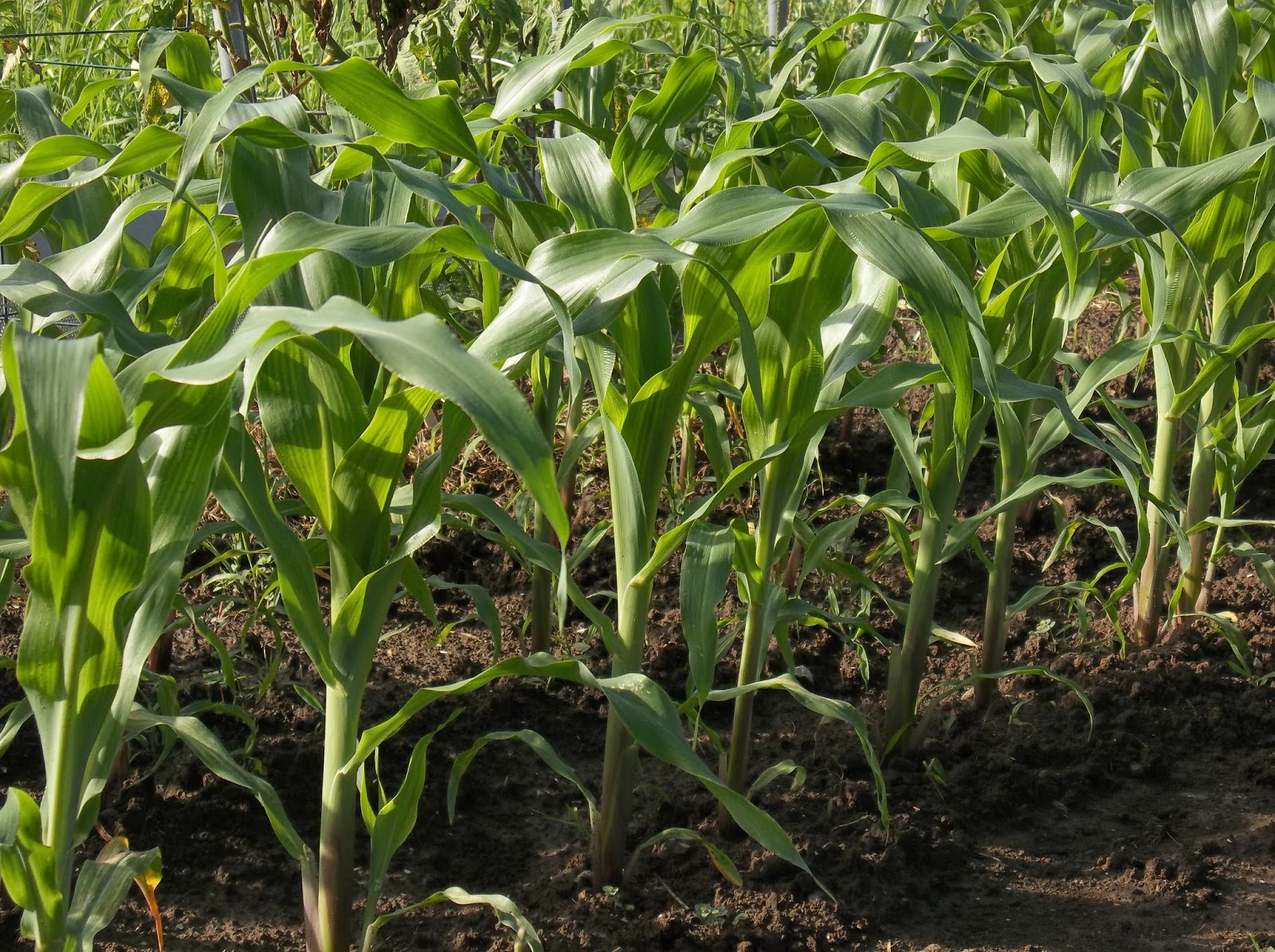
The farmers were late getting their crops planted, so I didn't feel so bad to belatedly get a little patch of corn planted. With all the rain, it is growing so fast it makes me gasp. I did give it a brew made with diluted chicken manure, fish fertilizer and rain water, steeped in the sun for weeks. Corn likes that sort of thing.


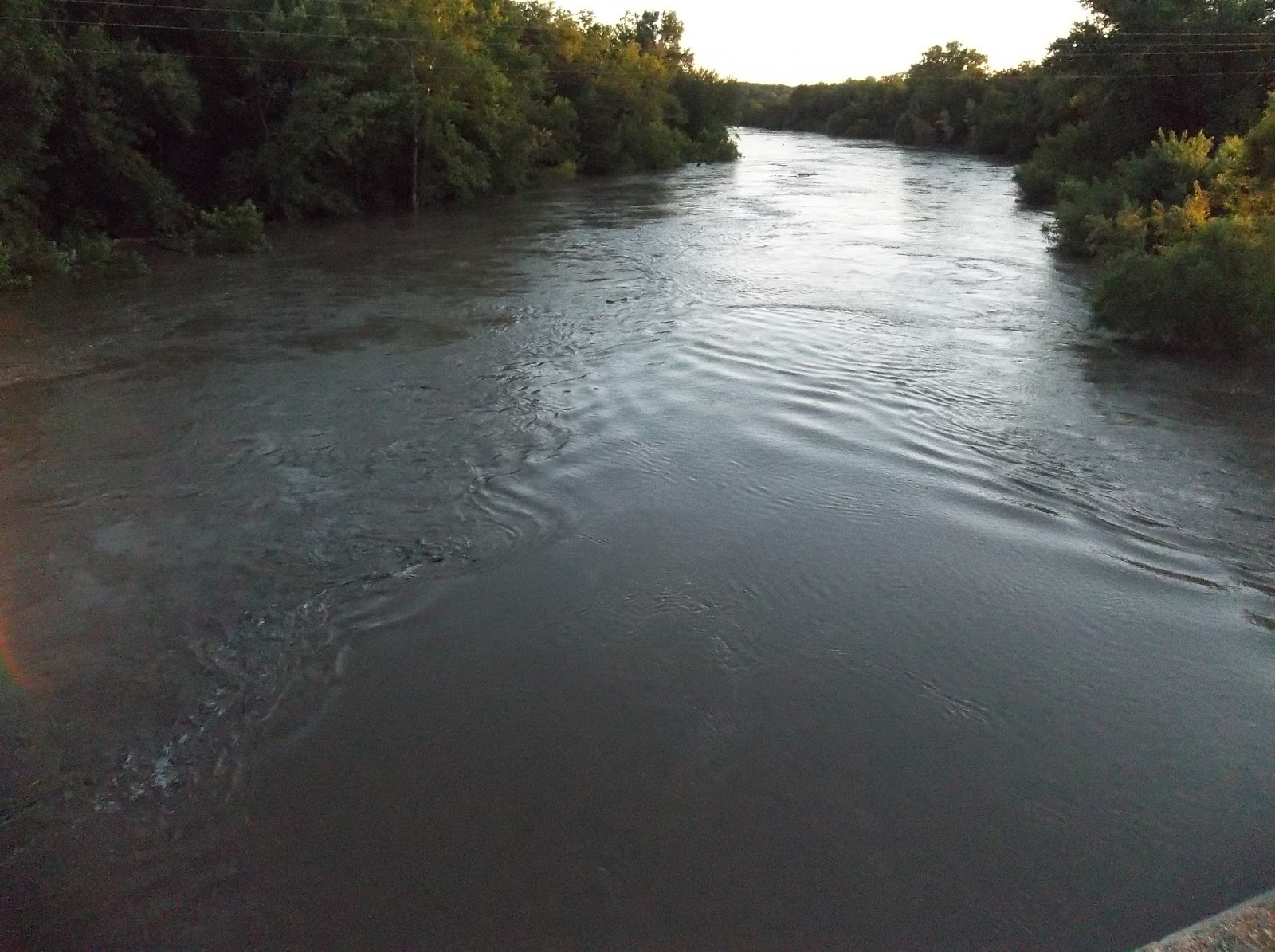
It seems that even more rain has fallen north of here. The river has been up over my fishing beach for most of the summer. Last night they got five more inches upriver, which is a tad much. We have been in an almost continuous state of flash flood warnings.

The speck at the end of the bridge is Beau, to give some idea of what a fine big bridge it is. This isn't even the entire span. I took the pic from the middle. When we go down there at sundown, we have it all to ourselves.

Today, the river is noisily crashing against a tree that straddled one of the supports, limbs first. This is looking downriver. It sounds like the ocean. Lots of trees and brush float by, but very little trash . The Grand is muddy but clean.


For the time being, I am accepting that the weeds have won this season. I find it takes my mind off my defeat to sit and knit socks in the shady end of the garden. There, I admire my Primrose marigolds (Parks Inca II Hybrid). They match the daylilies along the fence.

The Juliet tomatoes are producing quantities of fruits. There are too many to eat and not enough to make Juliet Jam or can.

Every day, I yank up a big tub of weeds from the flower beds. It would be a good lesson in not planting more than I can weed,  if  I could ever learn it.

Monday, July 6, 2015

The Well-Dressed Tree

Christmas trees aren't the only ones that get to wear skirts. This one is more than a skirt, it's practically a ball gown.

When I discovered a ground cherry growing under my newest apple tree last summer, I left it to go to seed.

Had no idea it would sprout so many new plants.

                               First, there is the bell-shaped yellow flower.

                  Next comes the berry, in a lantern-like, five-sided husk.

Now the tree, a Yellow Delicious apple, looks ready to appear at a Cotillion. Dressed like Scarlett O'Hara, it's decked out in paper lanterns. Too cool.


Wednesday, July 1, 2015

Different Worlds

Every now and again, I leave my rural area and meet with some normal people in town.

Trying to blend in, I don't rush outside when I hear an airplane go over. I hear planes up here but they are usually too high to be seen.

The City Folk talk about reality television, which definitely leaves me out of the conversation. I keep mum about not having television reception. They would not be able to comprehend a deliberate choice to pass on that form of entertainment.

If I did mention it, there would be questions.

What did I do at night? I have a DVD player and can check movies out at the library. I sometimes get movies from Netflix. It's not like I am off the grid.

Telling them I spent hours this week looking at the moon with my telescope would not make them feel better about my life, I'm sure. In fact, there is no quicker way to clear the room than to bring up astronomy, gardening or knitting.

However, when the conversation got around to iced coffee, I jumped in. I said, "I love it, with plenty of half and half." The response floored me. "You mean you make it yourself?" I tried to cover my eccentricity by saying it is twenty miles to any fast food place. Feeling like I wanted to have them get a tiny glimpse of my life, I mentioned that the WalMart there has a hitching post for the Amish customers' horses and buggies. Dead silence and averted glances greeted that announcement.

They are very nice people. I'm sure they prefer their lifestyle and would consider me deprived, or depraved.

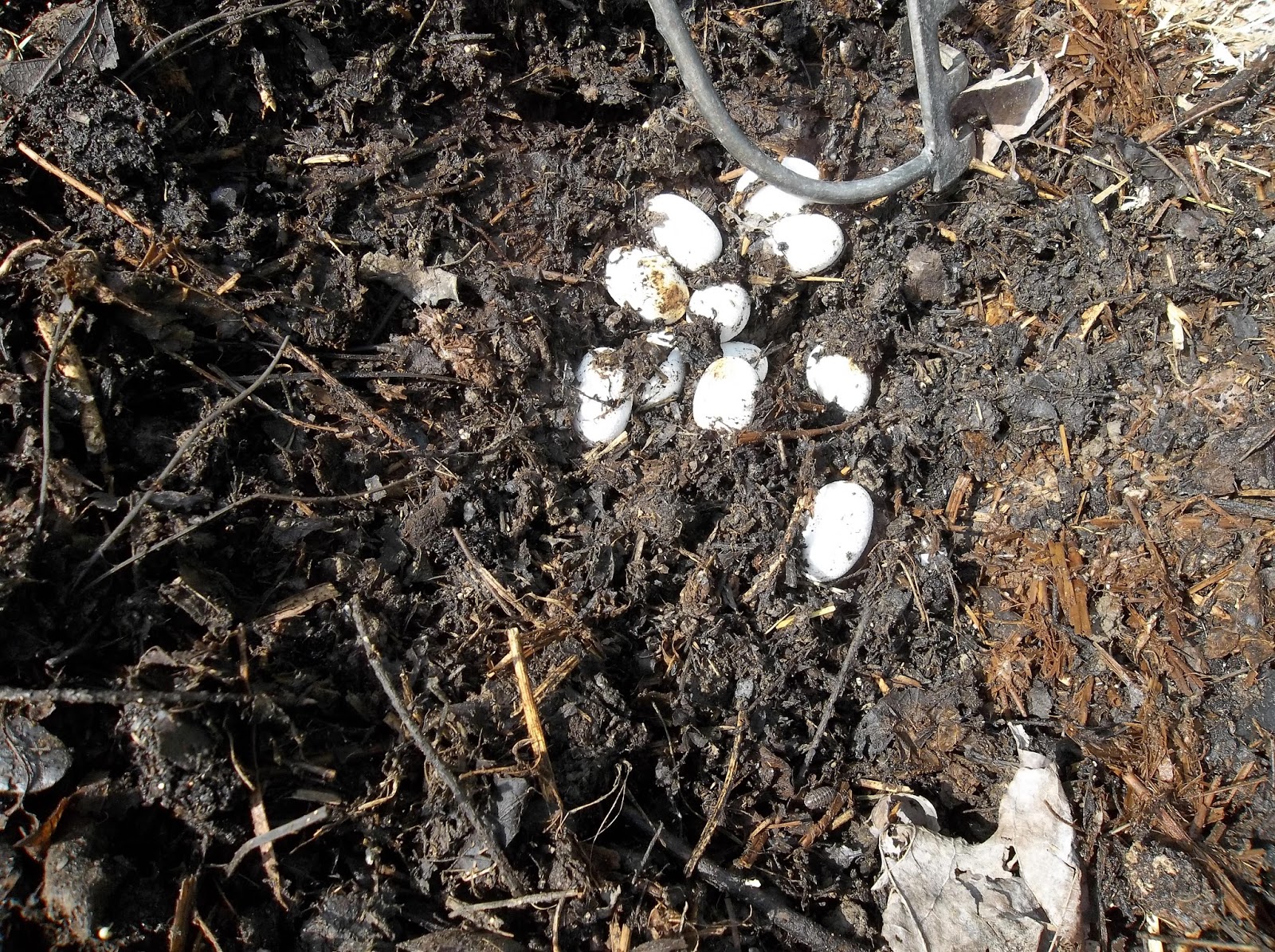
That would not have been the time nor the place to mention how happy I was to find a clutch of black snake eggs in the compost pile. I failed to show them this picture of critters that may help with the grasshopper situation. Incidentally, I raked the compost back over the eggs and left them to hatch out.


Pointless to take a bouquet of flowers to gatherings with City Folk. I tried that and the blooms were examined as if they were samples of moon rocks. They elicited queries as to what they were, indicating that they had never before seen daisies and lilies. No one said they were beautiful, which they were.

When my youngest granddaughter, Molly, came to stay for a few days, we had plenty of entertainment. She's only ten, but quite smart. Her family doesn't watch TV. She loved hearing all about astronomy. She understood Universal Time, which I thought was astonishing. She quickly learned how to find Jupiter and Venus with the astronomy binoculars. They are on loan from my son, who has light pollution in town. Molly used my telescope to locate Saturn and we found M4, a favorite globular cluster in Scorpio. We looked at star charts and that little kid grasped Right Ascension and Declination.

We also picked mulberries along the road, snacking on them right there. On rainy days, we worked a big puzzle and Molly crocheted, learning new stitches. She helped me figure out a Fair Isle pattern for a vest. She picked strawberries while I mowed. We made a batch of freezer jam. Another day, we made strawberry ice cream in the Donvier ice cream maker. We gave Beau a bath out in the yard. We made Sun Oven bread. Molly helped me herd three calves back inside the fence down the road. She took pictures of butterflies on the butterfly weed flowers with my telephoto lens camera.We also went to the nearby Amish town so she could enjoy seeing all the horse-drawn buggies.

We cooked our own food. Molly made us delicious French Toast for breakfast and I made dinner. It never occurred to us to watch a movie on TV. We were too busy experiencing reality.